


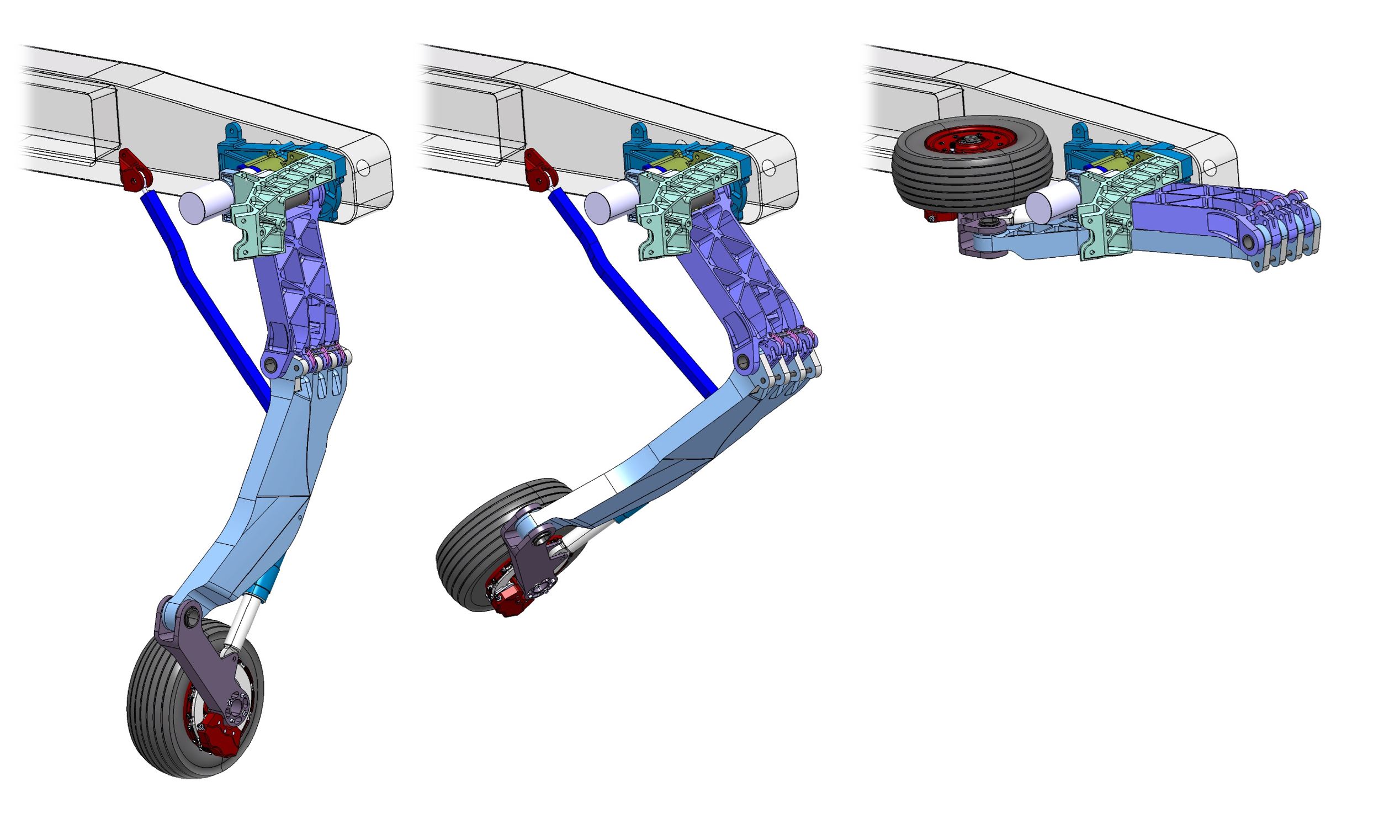
Last November, we had the pleasure of presenting Ole Thoebel’s special project: building his own airplane. A lot has happened since then. Due to winter weather conditions, Mr. Thoebel is currently unable to actively work on building the airplane. Instead, he is focusing on designing and implementing the landing gear—a key milestone on the road to completing the aircraft.
The landing gear is one of the central load-bearing structures of an aircraft, as it must reliably transfer the forces that occur during takeoff and landing to the airframe. The compact design of the aircraft limits the available installation space, meaning that standard landing gear cannot be used. For this reason, Mr. Thoebel developed a landing gear system specially tailored to the geometric and structural requirements of the aircraft.
A retractable landing gear was chosen for the aircraft. Although retractable systems are usually heavier than fixed landing gear, they offer considerable aerodynamic advantages: during flight, the retracted mechanism reduces air resistance, enabling higher flight speeds with the same engine power.
An FEM model was created to evaluate the structural strength. This model simulates the forces that occur during landing, including the total weight of the aircraft and possible vertical loads. The aim of the analysis is to identify the most critical load case and ensure that the landing gear functions reliably even under extreme conditions.
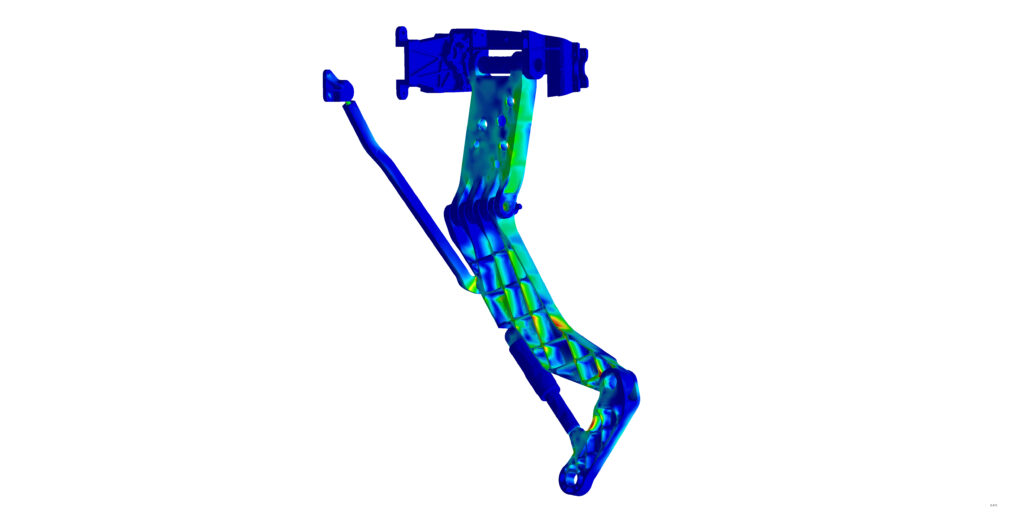
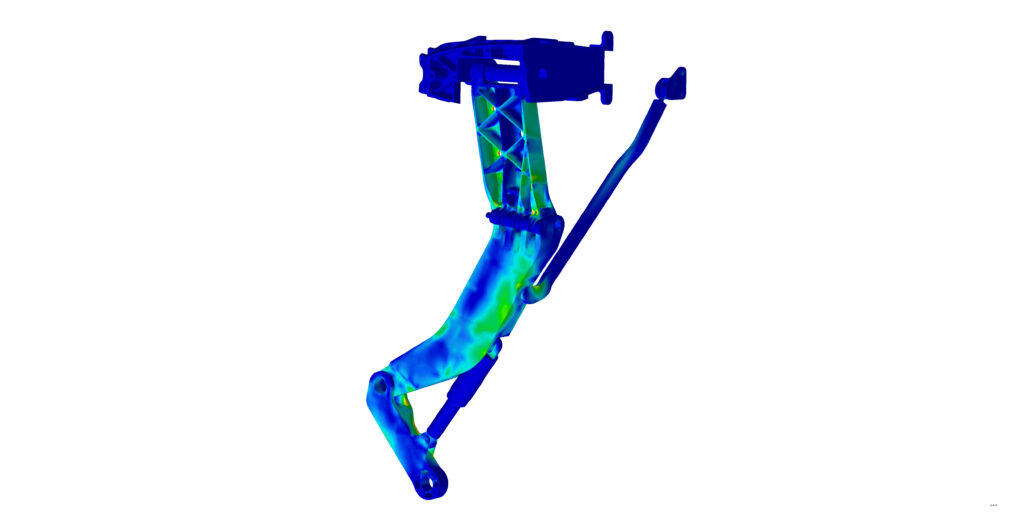
An integration concept was developed based on the calculated load cases. Extensive CAD analyses and comparisons of different design approaches enabled a practical solution to be implemented. Digital verification confirmed that the landing gear fits into the limited installation space and can be seamlessly integrated into the aircraft structure. Due to the geometric complexity, the structural integrity could only be validated through simulations. A maximum landing impact load of 3.75 g and the kinematic function of the retraction mechanism were tested to ensure smooth extension and retraction without collisions.
At the same time, a 3D-printed prototype was manufactured and integrated into the aircraft fuselage. This allows the mechanism, the fit in the limited installation space, and the connection points to the aircraft structure to be checked. Iterative prototype development allows adjustments to be made at an early stage before the final production of the components. Several iterations have already achieved improvements in geometry, mechanics, and integration; the current prototype is currently being finalized.
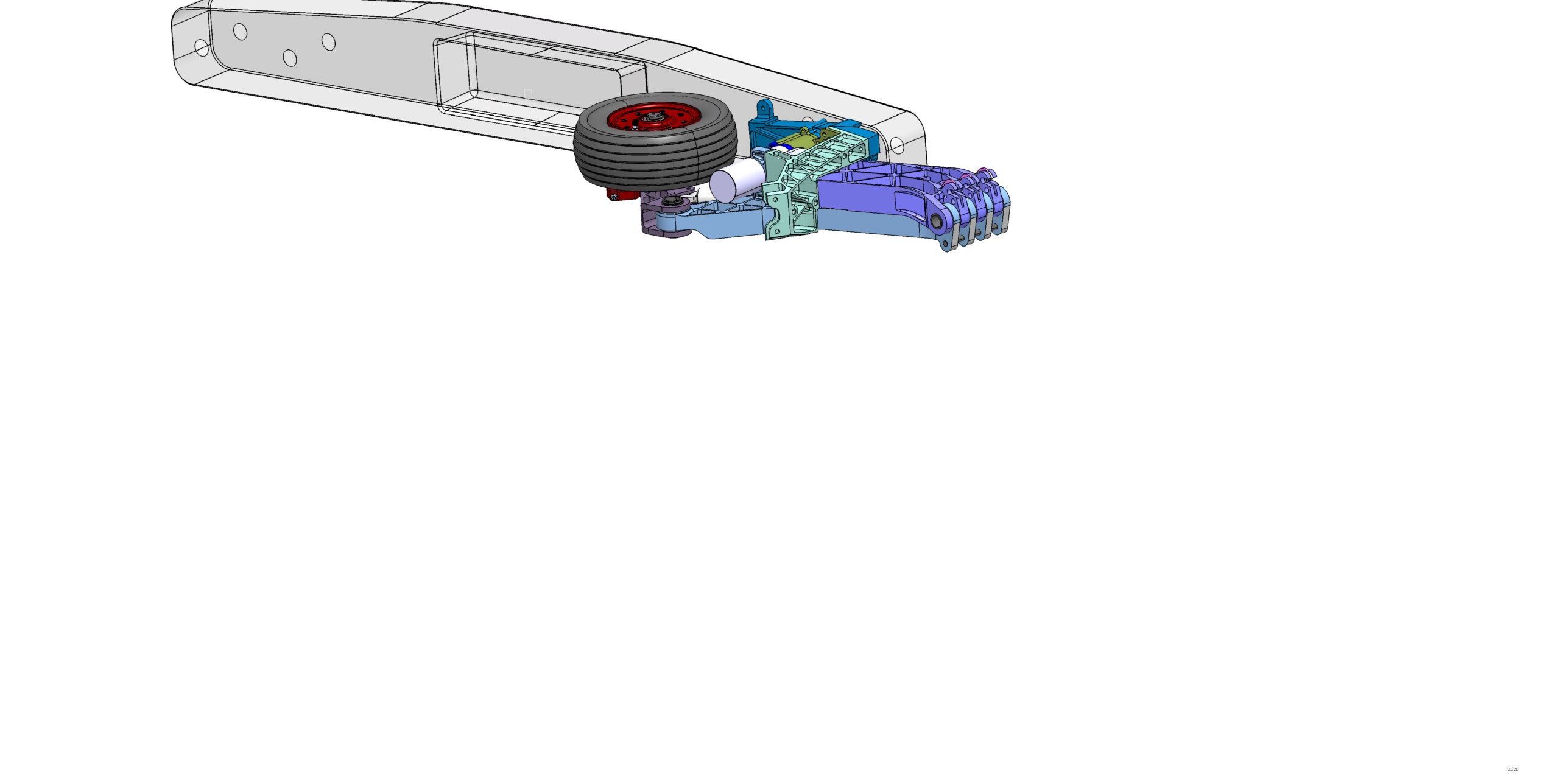
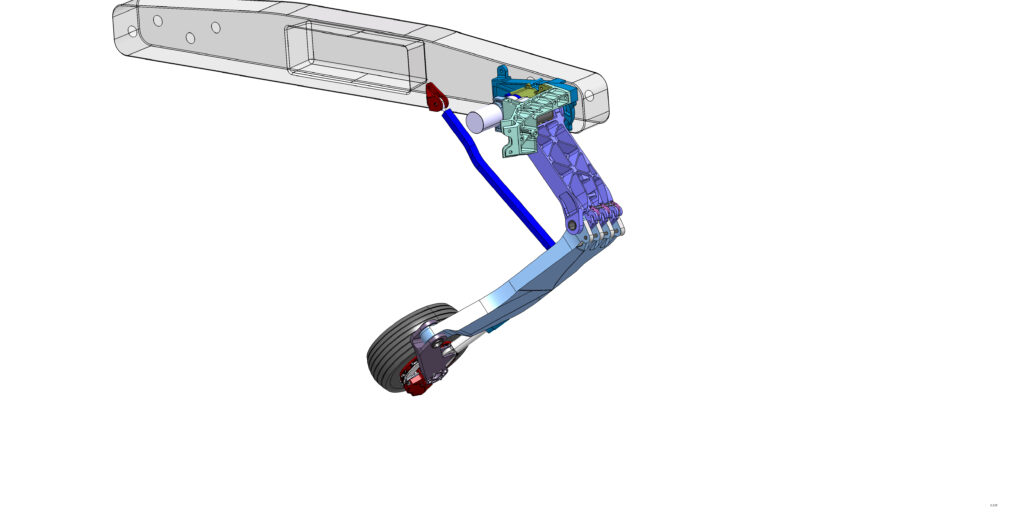
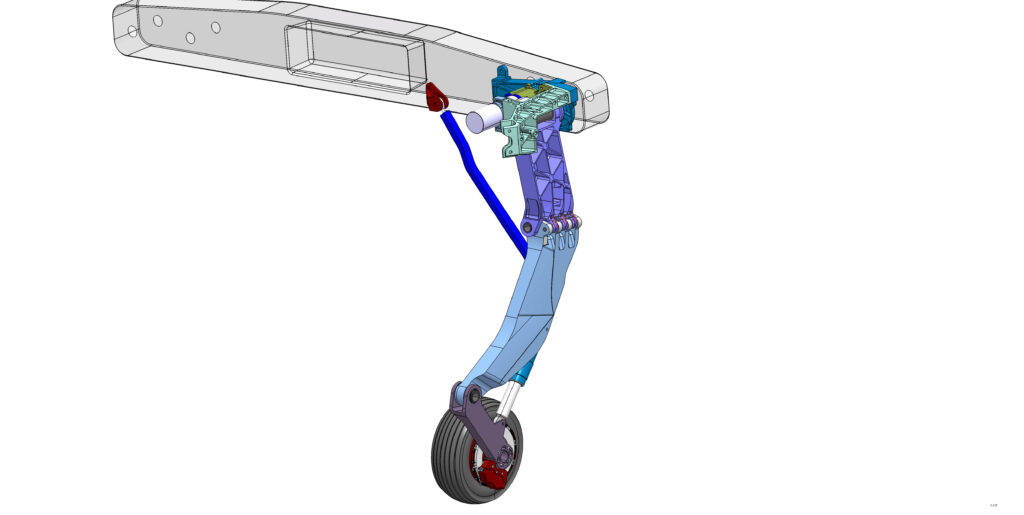
A special feature of the chassis is the combination of materials: while most components are made of milled aluminum, the wheel rim is made of carbon fiber. This combination offers an optimal balance between strength, weight, and manufacturability. In the future, the use of carbon fiber could be extended to other components in order to further reduce the overall weight.
We would like to thank Ole Thoebel for the valuable insights into our joint aircraft project and look forward to continuing to actively accompany and report on the progress of this innovative project.


